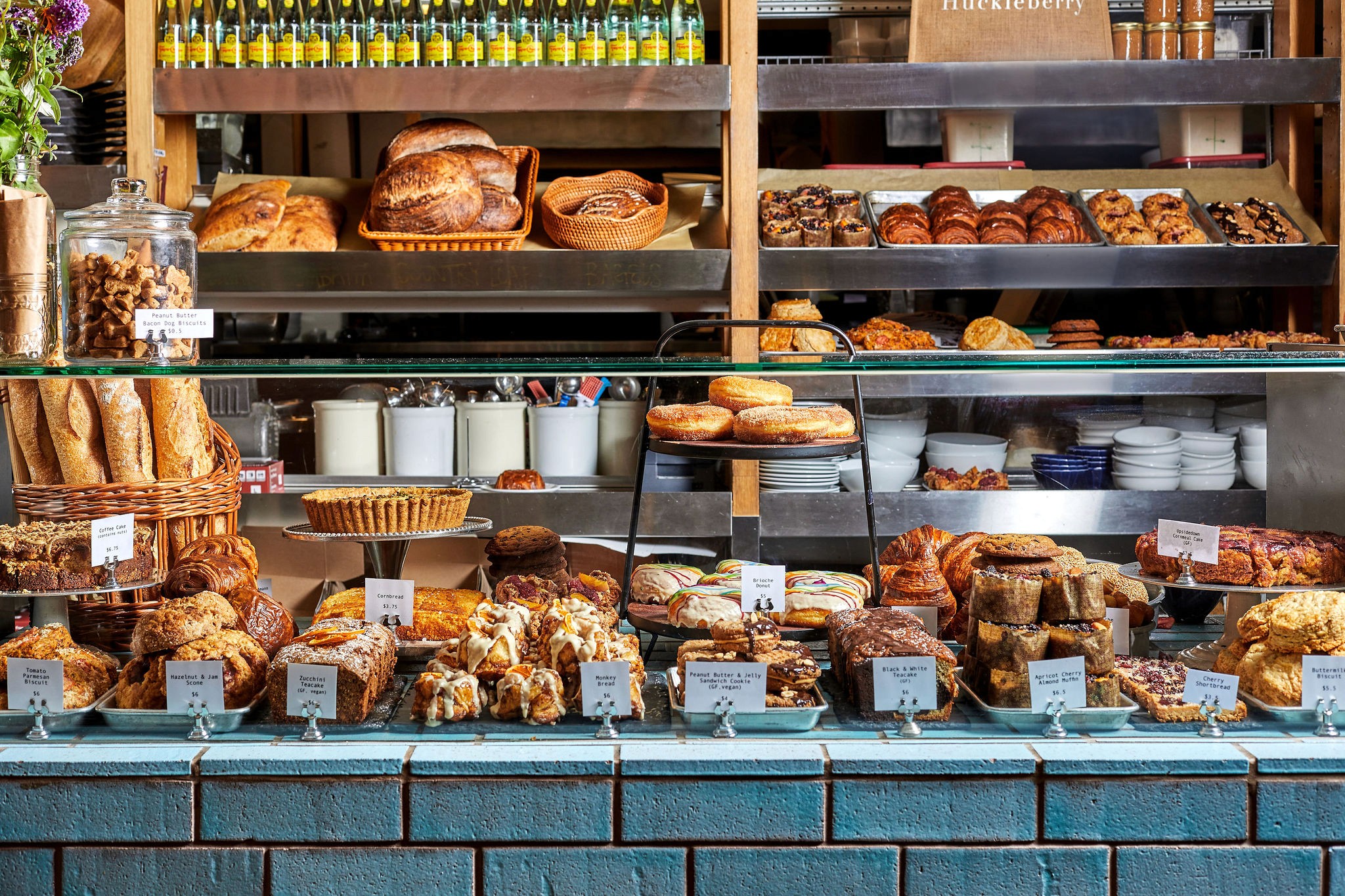
This morning I walked to a neighborhood bakery 5 minutes from home. While buying products, walking back, and starting lunch preparation, I designed a comprehensive operational system for the business.
Total active time: 15-30 minutes
Access level: Customer-side observation only
Result: Enterprise-grade operational architecture
The Business Context
Operating Model:
24/7 operation, 365 days annually
Only bakery in neighborhood area
20+ workers across multiple shifts
Products: bread, pastries, cakes, snacks, desserts
Price point: Lower-mid range
Traffic Patterns:
Morning: Low volume
Afternoon: Medium (school times peak)
Evening/Night: High volume (10-13 customers simultaneously at capacity)
Current State: Manual operations, typical for small-medium bakeries. No digital systems, no systematic tracking, completely trust-based processes.
Physical Security Vulnerabilities
Uncontrolled Customer Flow:
The shop has two doors (left and right sides). Customers can enter and exit from either door without verification or surveillance.
Critical vulnerability: During evening peak hours with 10-13 simultaneous customers, tracking individual customer movements becomes nearly impossible.
Theft scenarios:
Customer enters right door, takes product, exits same door
Customer takes product to worker, never goes to cashier
Customer presents empty hands to cashier, product hidden
Estimated loss: 3-7% of inventory (industry standard for uncontrolled retail environments)
Transaction Manipulation
The current process:
Customer requests product needing preparation
Worker prepares, weighs, packages
Worker tells customer the price verbally
Customer walks to cashier
Customer tells cashier the price
Cashier accepts customer's statement without verification
Manipulation opportunity: Worker says $5, customer tells cashier $3. During busy periods, cashier has no way to verify.
Estimated loss: 2-5% of revenue
Kitchen Operations Blindness
Complete lack of visibility:
No tracking of raw materials usage
No logging of production yields
No waste reporting system
No recipe standardization
Consequences:
Unknown if materials are stolen or legitimately used
Cannot identify inefficient recipes or processes
Waste patterns invisible (can't optimize)
Quality varies by worker and shift
Estimated loss: 5-10% of materials (theft) + 10-15% (untracked waste)
Quality Control Gaps
No standardization across 20 workers on multiple shifts:
Recipe variations create inconsistent products
No training documentation
No quality verification process
Customer experience varies unpredictably
Impact: Reputation damage, customer loss, profit margin inconsistency
Estimated loss: 5-10% revenue from quality-related issues
Administrative Burden
Manual processes everywhere:
Inventory counts (time-consuming, error-prone)
Sales tallying (delayed, inaccurate)
Expense tracking (receipts and spreadsheets)
Worker time and payroll (manual calculations)
Financial visibility (weeks behind reality)
Cost: 15-20 hours weekly + 5-10% error rate in all calculations
Core Architecture Principle: Centralized Control + Systematic Verification + Automated Tracking
All components connected through cloud-based system with permission-based access and real-time visibility.
Physical Flow Redesign
Single Controlled Entry:
Customer entry only through right door
Worker positioned close to right door during all hours
Monitors incoming customers (flags suspicious behavior)
Single Controlled Exit:
Customer exit only through cashier at left door
Cashier verifies all customers check out
No customer leaves without scan and payment
Immediate impact: Theft becomes difficult and obvious. Requires no technology deployment, just worker positioning and signage. Quickest win with minimal cost.
Barcode Verification System
Hardware: Commercial bakery scales with integrated barcode printers (standard in larger supermarkets)
Prepackaged products:
Barcode generated during production
Includes product code, weight, price calculation
Applied before shelving
Custom-prepared products:
Customer requests preparation
Worker weighs on smart scale
Scale auto-calculates price and prints barcode
Worker applies to package
Cashier process:
Scan barcode (no manual price entry)
System automatically logs sale
Inventory automatically deducted
Complete audit trail created
Result: Price manipulation becomes impossible. Cashier errors eliminated. Complete sales tracking automatic.
Kitchen Production Tracking
Raw Materials Management:
All incoming materials logged with quantities
System calculates expected production output
Automated low-stock alerts for reordering
Production Logging:
Weigh finished products before shelving
System compares actual vs expected output
Discrepancy flagging for investigation
Waste Reporting:
Kitchen workers report waste through app
Categories: burnt, damaged, dropped, quality issues
Automatic logging and inventory adjustment
Manager visibility into patterns
Result: Complete visibility into materials usage and waste. Identify inefficiencies. Track theft attempts. Optimize recipes based on data.
Inventory Automation
Real-time tracking:
Every sale automatically deducts inventory
Every production run adds inventory
Every waste report adjusts inventory
Dashboard shows current stock levels
Intelligent alerts:
Low stock warnings before running out
Slow-moving product identification
Expiry date approaching notifications
Production scheduling recommendations
Forecasting:
System learns sales patterns by day/time
Predicts needed production quantities
Optimizes kitchen scheduling
Reduces overproduction waste
Result: Eliminate stockouts. Reduce waste 50-70%. Optimize raw material ordering. Improve cash flow.
Financial Visibility Dashboard
Real-time business intelligence:
Sales by hour/day/week/month
Profit margins by product category
Current inventory valuation
Waste and loss tracking
Worker productivity by shift
Automated reporting:
Daily sales summary
Weekly profit/loss statements
Monthly comparative analysis
Expense tracking integration
Dynamic pricing:
Track raw material cost changes
Auto-adjust prices to maintain margins
Manager approval for changes
Customer-facing prices update automatically
Result: Instant business health visibility. Data-driven decisions. Identify profitable products. Optimize focus.
Worker Management
Time tracking: Digital clock in/out with automatic pay calculation
Task management: Daily checklists and completion tracking
Training materials: Digital SOPs and recipe documentation
Performance metrics: Productivity and quality tracking
Payroll integration: Automatic calculation with transparent statements
Result: Eliminate manual time tracking. Standardize training. Clear accountability.
AI-Powered Optimization
Weekly analysis:
System exports all data (inventory, sales, costs, waste)
AI processes comprehensive business analysis
Generates actionable recommendations
AI suggestions:
"Increase bread price 5% based on demand elasticity"
"Reduce pastry production 20% - high waste rate"
"Recipe X has 2x waste rate vs Recipe Y - investigate"
"Peak hours need +1 worker, reallocate from slow periods"
"Raw material substitution opportunity: $500/month savings"
Result: Continuous optimization through intelligent analysis. Competitive advantage through data-driven operations.
Expected Outcomes
Note: Financial projections use retail food service industry benchmarks applied to observed operational patterns, not client-specific financial data.
Expected Impact (Industry Benchmark Analysis)
Using retail food service industry data:
Theft Reduction: 60-80%
Controlled flow + systematic verification
Industry standard: Reduces loss from 10-15% to under 3%
Waste Reduction: 50-70%
Tracking enables optimization of recipes and processes
Industry standard: Expiry tracking + production logging
Administrative Efficiency: 85% reduction
Automation replaces 15-20 hours weekly of manual work
Quality Improvement: 70-80%
Standardization reduces customer loss from inconsistency
Price Manipulation: Eliminated
Barcode system prevents customer price reporting
Inventory Optimization: 60-70%
Reduce overproduction and stockout losses
For typical small-medium bakery ($300K-500K revenue):
Estimated Annual Value: $60K-120K
Implementation Cost: $15K-25K
Payback Period: 2-5 months
Note: Numbers based on retail industry benchmarks applied to observed operational patterns, not client-specific financial data.
Operational Transformation
Owner Time Freedom:
From constant presence requirement to 1-2 hours daily remote monitoring
50-60 hours weekly recovered for strategic work
Quality Consistency:
Standardized recipes across all shifts
Systematic training materials
Predictable customer experience
Decision Making:
Data-driven inventory and pricing
AI-powered optimization
Real-time business visibility
Scalability:
System enables multi-location expansion
Replicable processes
Remote management capability
Implementation Strategy
Phase 1: Quick Wins (Week 1)
Physical flow control: Entry/exit management and worker positioning
Cost: $0 (positioning only)
Impact: Immediate 40-60% theft reduction
Phase 2: Core System (Weeks 2-4)
Barcode system: Scales, printers, scanners
Cashier integration: Sales logging and inventory
Cost: $5K-8K
Impact: Eliminate price manipulation, automate tracking
Phase 3: Production (Weeks 5-7)
Kitchen tracking: Production logging and waste reporting
Raw materials: Inventory and forecasting
Cost: $3K-5K
Impact: Complete materials visibility, waste reduction
Phase 4: Advanced (Weeks 8-10)
AI analysis: Business intelligence and recommendations
Worker management: Time tracking and payroll
Cost: $2K-4K
Impact: Continuous optimization, administrative automation
Total Implementation: 10 weeks, $10K-17K phinvestment
Universal Patterns
What This Reveals About Small Food Businesses
Pattern 1: Physical Layout Determines Security
Multiple entry/exit points create theft opportunities. Solution isn't more security personnel - it's systematic flow control.
Pattern 2: Trust-Based Systems Break Under Load
Worker-quotes-price model works at low volume but fails during busy periods. Systematic verification scales.
Pattern 3: Invisible Operations Bleed Money
Kitchen waste, production yields, theft - if unmeasured, cannot be managed. Systematic logging creates visibility.
Pattern 4: Quality Comes From Standardization
Multiple workers without documented processes create inconsistency. Digital SOPs enable consistency.
Pattern 5: Manual Administration Doesn't Scale
24/7 operation with 20 workers requires automated administration. Manual processes become bottleneck.
Cross-Industry Applicability
This architecture applies directly to:
Food service: Restaurants, cafes, fast food (similar operations)
Retail: Grocery, convenience stores (entry/exit and inventory patterns)
Production: Small manufacturing (materials to finished goods tracking)
Core principles stay constant across contexts:
Control entry/exit points
Systematic verification mechanisms
Track all material movements
Real-time visibility dashboards
Standardized quality procedures
Automated administrative processes
Key Insight: Pattern Recognition Speed
What This Case Demonstrates
Observation time: 15-30 minutes (including walk home)
System complexity: Enterprise operational architecture
Access level: Customer-side only (no internal visibility)
This wasn't extensive research or detailed analysis. This was involuntary pattern matching running in background processing.
While buying products and walking home, my brain automatically:
Mapped physical space and workflow
Identified security vulnerabilities
Spotted waste and quality gaps
Designed technical solutions
Calculated business impact using industry benchmarks
The perception is consistent across contexts:
Call center (2.5 days): $50K+ waste identified
Family retail (years): Complete operational architecture
Neighborhood bakery (15-30 minutes): Enterprise system design
What transfers: Pattern recognition for operational inefficiencies
What varies: Industry-specific implementation details
Interested in operational system design for your business?
Disclaimer: Financial projections based on industry benchmarks applied to observed operational patterns. Actual results vary by business size, location, and implementation quality.